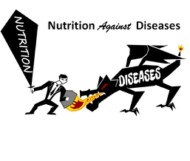

Although ... supplying the needed nutritional factors may be far from simple ... practically any human weakness, deformity, deficiency, or disease can be combatted with some success by supplying the needed nutrients to the right locality at the right time (4).
Roger J. Williams "Biochemical Individuality", page 168.
Supplementation Considerations
Our body is a most amazing machine! If properly nourished, our body is capable to protect itself against an hostile hostile environment of pathogens and parasites and it is able to maintain in equilibrium (homeostasis) the various molecules required for good health.
In passing, growing up in 1940s in a peasant community south of Rome (Ciociaria) at a time when modern "science" had not "infected" our beliefs regarding what was good to eat, how to grow food, and how to deal with sickness, I seem to have always known the healing power of good nutrition. And much to my disappointment, I had never found any medical article or book that echoed my beliefs in good nutrition, until recently. I decided to re-read carefully reference (4) "Biochemical Individuality" by R.J. Williams. The quote at the top right of this page is from this book. It is a shame that medical research has not continued R.J Williams' work. Could it be because research on how to achieve good health is not profitable for the health industries?
To protect itself against pathogens and defective (cancer) cells, the body relies on an "army" of specialized cells that recognize pathogens and defective cells and mark them for destruction by other specialized cells. This army of specialized cells is called Immune System.
To maintain our cells functioning correctly, and thus keep our body healthy, our body relies on our Homeostasis (equilibrium) Regulation System. This regulation mechanism relies on our Endocrine organs to produce, secrete, and regulate hormones that serve as chemical "messengers" that serve to coordinate cellular and organ activities. There are eight Endocrine organs namely, Pineal gland, Hypothalamus, Pituary gland, Thyroid and Parathyroid glands, Thymus, Suprarenal glands, Pancreas, Ovaries (in women), Testes (in men). These organs are referred to as "Endocrine" ("endo" meaning "inside") because they secrete hormone directly into the blood. There are also Exocrine organs. These are called "Exocrine" ("Exo" meaning "outside") because they direct their secretions to the outside of the body through ducts, such as the sweat glands.
In general, it is prudent to keep in mind that how the body regulates its functioning is not completely understood and may be too subtle for science to ever completely understand it. Example of how complex our body is that modern medicine still does not understand things such as the functions of the Appendix, and why total anaesthesia works, just to mention a couple. So, ultimately, we need always to listen to our body, and reject anything that our body does not like.
The task of the Endocrine system is to maintain the many molecules required for our body to the correct level so that our body functions well. For example the Endocrine system keeps molecules such as testosterone, cholesterol, and insulin at the right level.
In general, there are two types of supplementation, namely: (1) Supplementation of molecules that the body is not able to synthesize itself, such as vitamin C, essential amino acids, and essential fatty acids; (2) Supplementation of molecules that the body is designed to synthesize itself, such as testosterone, creatinine, and insulin. It is noteworthy that there is a branch of medicine called Orthomolecular Medicine which seeks to cure diseases by supplementing the body with molecules that are normally present in the body.
Homeostasis is very important for good health. One would expect that supplementation of molecules that the body cannot synthesize itself cannot interfere with homeostatic regulation and, therefore, should be safe.
However, one would expect that supplementation of molecules that the body is designed to synthesize itself interferes with homeostatic regulation, unless the supplementation is required because some of the endocrine organs are not functioning well such as in the case of insulin dependent Diabetes which requires insulin supplementation because the pancreas does not function well.
So far, I have focussed on supplementation of molecules that the body cannot synthesize itself, namely vitamins (There is only a couple of vitamins that the body can synthesize itself to some extent if the environmental coditions are right). And so far what I have been hearing from my body has been good!
- Under Construction -